
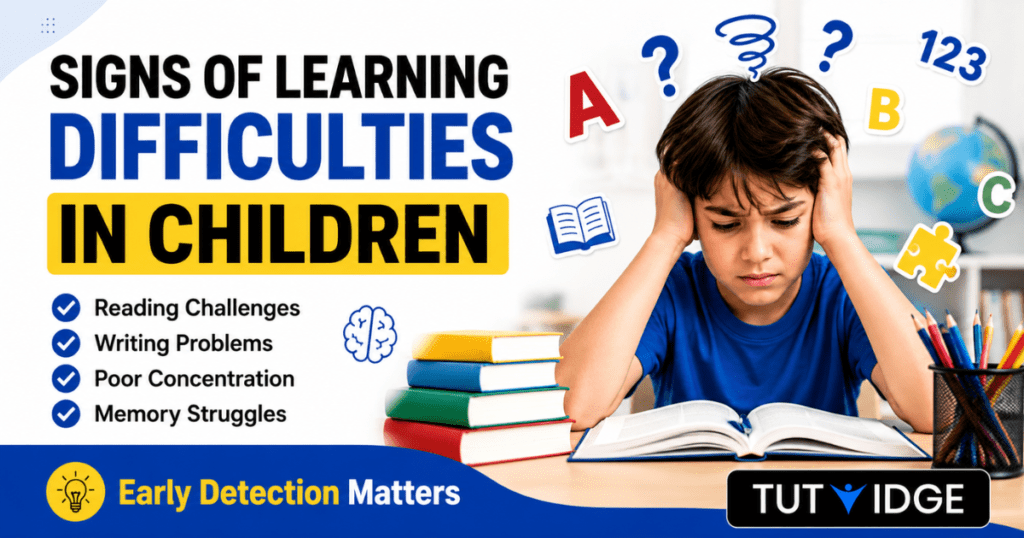
Children learn at different speeds. Some may need extra time to understand new concepts. However, persistent struggles in learning can sometimes indicate a learning difficulty. Recognising the signs of learning difficulties in children at an early stage can help parents and teachers provide the right support. Early intervention often improves academic performance, confidence, and overall development.
What Are Learning Difficulties?
Learning difficulties are conditions that affect how a child processes, understands, remembers, or uses information. They are not related to intelligence. Many children with learning difficulties are highly intelligent but learn differently from their peers. Common learning difficulties include reading, writing, and math-related challenges, as well as attention-related problems.
Early Signs of Learning Difficulties in Preschool Children
Learning difficulties may appear before a child starts school.
Some common signs include:
- Delayed speech and language development
- Difficulty learning new words
- Trouble following simple instructions
- Problems recognising colours, shapes, or letters
- Difficulty remembering songs or nursery rhymes
- Poor attention span for age
- Trouble interacting with other children
These signs do not always mean a child has a learning difficulty. However, repeated challenges should be monitored carefully.
Signs of Learning Difficulties in School-Age Children
As academic demands increase, learning difficulties often become more noticeable.
1: Difficulty Reading
Children may:
- Read slowly
- Skip words while reading
- Struggle to recognise common words
- Have trouble understanding what they read
- Avoid reading activities
Reading difficulties are among the most common learning challenges in children.
2: Problems With Writing
Writing difficulties may include:
- Poor handwriting
- Frequent spelling mistakes
- Difficulty organising thoughts on paper
- Trouble copying from the board
- Avoiding written assignments
These issues can affect school performance and confidence.
3: Struggles With Mathematics
Some children find math especially challenging.
Common signs include:
- Difficulty understanding numbers
- Trouble learning multiplication tables
- Problems with basic calculations
- Difficulty solving word problems
- Confusion with time and measurements
Consistent math struggles may indicate a specific learning difficulty.
Memory and Concentration Problems
Children with learning difficulties may have trouble remembering information.
Signs include:
- Forgetting instructions quickly
- Losing school materials often
- Difficulty completing tasks
- Poor concentration during lessons
- Trouble following multi-step directions
These challenges can affect learning across multiple subjects.
Emotional and Behavioural Signs
Learning difficulties can sometimes impact a child’s emotions.
Parents may notice:
- Frustration during homework
- Low self-confidence
- Anxiety about school
- Avoiding classroom activities
- Frequent complaints about schoolwork
Children may feel discouraged when they struggle despite trying hard.
When Should Parents Seek Help?
Parents should consider professional support if learning challenges continue for several months or affect academic progress.
Speak with:
- Teachers
- School counselors
- Educational psychologists
- Learning specialists
Early assessment can identify specific needs and help create an effective learning plan.
How Parents Can Support Their Child
Parents play an important role in helping children succeed.
Helpful strategies include:
- Creating a consistent study routine
- Breaking tasks into smaller steps
- Using visual learning tools
- Encouraging regular reading practice
- Celebrating small achievements
- Working closely with teachers
A supportive environment can improve both learning and confidence.

FAQ’s
1. What are the first signs of learning difficulties in children?
Early signs may include delayed speech, difficulty following instructions, poor memory, and trouble recognising letters or numbers.
2. Are learning difficulties the same as low intelligence?
No. Learning difficulties affect how information is processed. Many children with learning difficulties have average or above-average intelligence.
3. At what age can learning difficulties be identified?
Some signs can appear during preschool years. Some other signs become more noticeable once a child starts formal education.
4: What are the signs your child needs tutoring?
Some common signs your child needs tutoring include consistently struggling with homework, receiving declining grades, lacking confidence in school, having difficulty understanding lessons, or showing frustration with learning despite regular effort. Early support can help improve both academic performance and confidence.
5. Can learning difficulties be treated?
Learning difficulties cannot be cured, but appropriate support, tutoring, and educational strategies can help children succeed.
6. Should I worry if my child struggles in one subject?
Not necessarily. Every child has strengths and weaknesses. However, ongoing difficulties across multiple areas may require professional evaluation.