
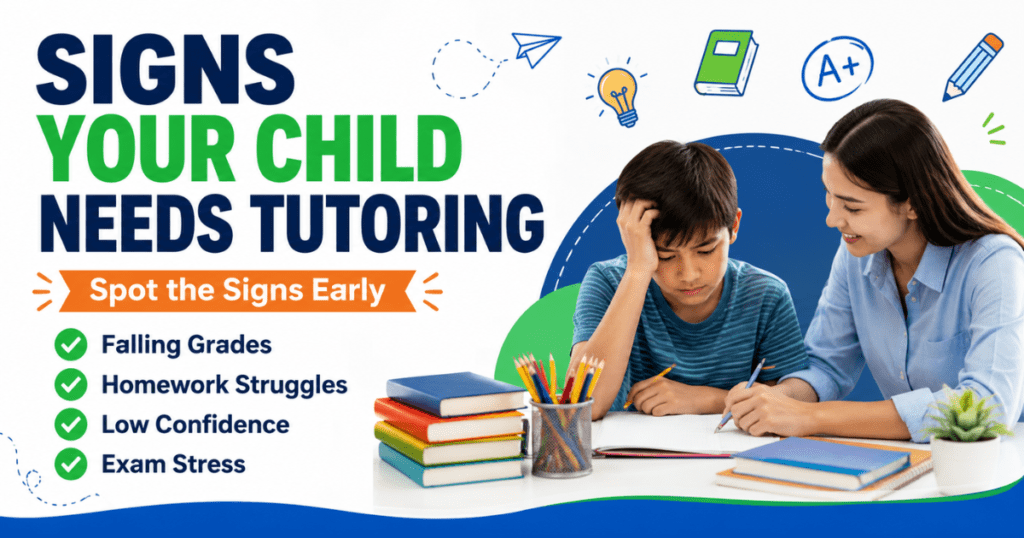
Many children face challenges in school at some point. Some struggle with specific subjects. At the same time, others lose confidence in their ability to learn. Tutoring can provide extra support and help children improve their academic performance. Knowing when your child needs tutoring is important. Early intervention can prevent learning gaps from becoming bigger problems. Here are the most common signs your child needs Tutoring.
10 Signs Your Child Needs Tutoring
The following are the 10 Signs Your Child Needs Tutoring:
1. Falling Grades
One of the clearest signs is a drop in grades. They may need additional help if your child consistently scores lower on tests, quizzes, or assignments. A sudden decline in performance often indicates difficulty understanding new concepts. Tutoring can identify weak areas and provide focused support.
2. Difficulty Completing Homework
Homework should reinforce classroom learning. If your child spends hours struggling with homework or frequently asks for help. They may not fully understand the material taught in class. A tutor can explain concepts in a simple way and help to build a stronger understanding.
3. Lack of Confidence in School
Children who struggle academically often lose confidence.
They may say things like:
- “I’m not good at math.”
- “I can’t do this.”
- “I’ll never understand it.”
Low confidence can affect motivation and performance. Tutoring encourages and helps students experience success, which boosts self-esteem.
4. Avoiding Schoolwork
Some children avoid homework, studying, or reading because they find it difficult.
Signs may include:
- Making excuses to skip homework
- Procrastinating regularly
- Becoming frustrated quickly
- Refusing to study for tests
Tutoring can make learning more manageable and enjoyable.
5. Poor Test Results
Your child may complete homework successfully but perform poorly on tests.
This can indicate problems with:
- Test-taking skills
- Time management
- Exam preparation
- Understanding key concepts
Tutors can teach effective study techniques and exam strategies.
6. Trouble Keeping Up in Class
Every classroom moves at a different pace. If your child frequently feels lost during lessons or struggles to keep up with classmates, extra support may be needed. Tutoring provides personalised instruction that matches your child’s learning speed.
7. Learning Gaps from Absences
Missing school due to illness, family travel, or other reasons can create learning gaps. Even a few missed lessons can make future topics harder to understand. A tutor can help your child catch up and stay on track.
8. Teacher Concerns
Teachers often notice learning difficulties before parents do.
Pay attention if a teacher mentions:
- Declining performance
- Lack of participation
- Difficulty understanding lessons
- Missing foundational skills
Working with a tutor can address these issues before they become larger challenges.
9. Difficulty with Reading or Writing
Strong literacy skills are important for success in all subjects.
You may notice:
- Slow reading speed
- Poor reading comprehension
- Frequent spelling mistakes
- Difficulty organising written work
Tutoring can improve reading, writing, and communication skills.
10. Preparing for Important Exams
Tutoring is not only for struggling students.
Many high-performing students use tutoring when preparing for important exams such as:
Extra guidance can improve performance and confidence.

Benefits of Early Tutoring
Starting tutoring early can provide several advantages:
| Benefit | How It Helps |
|---|---|
| Improved Grades | Better understanding of subjects |
| Increased Confidence | Greater motivation to learn |
| Strong Study Habits | Better organisation and time management |
| Personalized Learning | Lessons tailored to individual needs |
| Reduced Stress | Less frustration with schoolwork |
How to Choose the Right Tutor
When selecting a tutor, look for:
- Subject expertise
- Teaching experience
- Good communication skills
- Personalised lesson plans
- Positive student feedback
The right tutor should make learning engaging and support your child’s academic goals.
FAQ’s
1. At what age should a child start tutoring?
A child can start tutoring whenever academic challenges appear. Some students benefit from tutoring in primary school when they need support.
2. How do I know if my child needs tutoring in math?
Frequent mistakes, poor test scores, homework struggles, and low confidence in math are common signs.
3. Can tutoring help confident students?
Yes. Tutoring can help high-achieving students strengthen skills, prepare for exams, and reach higher academic goals.
4. How many tutoring sessions does a child need per week?
Depending on their learning needs and goals. Most students benefit from one or two sessions per week.
5. Is online tutoring effective?
Yes. Modern online tutoring provides personalised learning, flexibility, and access to qualified tutors from anywhere.