
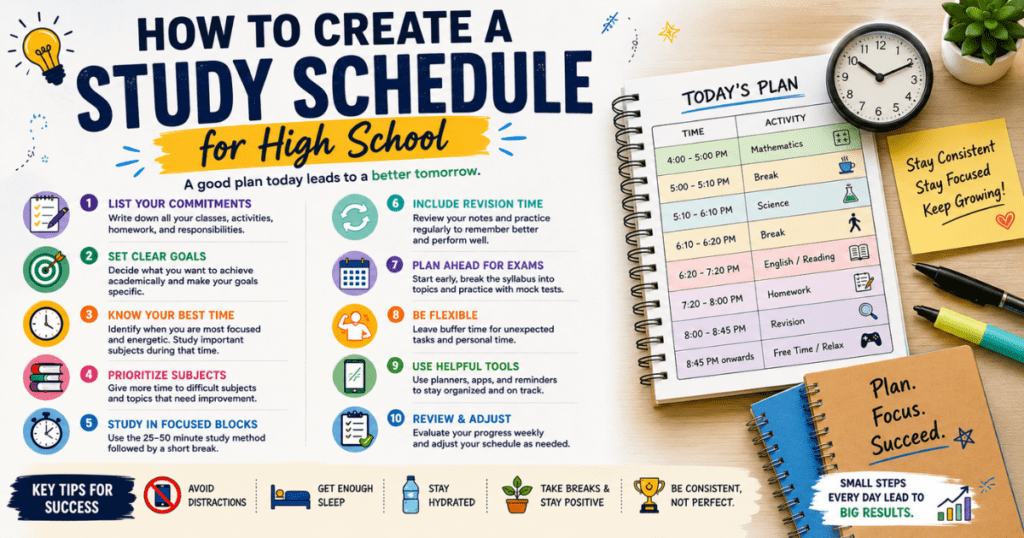
High school can be busy and challenging. Students often balance classes, homework, exams, extracurricular activities, and personal commitments. It is easy to feel overwhelmed without a proper plan. A well-structured study schedule helps students stay organized, reduce stress, and improve academic performance. This article explains how to create a study schedule for high school and maintain it successfully.
Why a Study Schedule Is Important
A study schedule helps students manage their time wisely. They can study consistently throughout the week instead of cramming before exams. Regular study sessions improve understanding, retention, and confidence.
Benefits of a study schedule include:
- Better time management
- Reduced procrastination
- Improved grades
- Less exam stress
- More free time for hobbies and relaxation
- Balanced academic and personal life
Creating a schedule does not mean studying all day. It means using available time efficiently.
How To Create A Study Schedule For High School?
The following are 10 steps to explain how to create a study schedule for high school.
Step 1: List All Your Commitments
Write down all regular activities before creating a study plan. Include:
- School hours
- Homework
- Sports practice
- Clubs and extracurricular activities
- Family responsibilities
- Part-time work
- Personal time and hobbies
This helps you identify available study periods during the week.
Step 2: Set Clear Academic Goals
A study schedule works best when it supports specific goals.
Examples include:
- Improve mathematics grades
- Prepare for upcoming exams
- Complete assignments before deadlines
- Strengthen weak subjects
- Maintain high overall performance
Clear goals help you prioritize tasks and stay motivated.
Step 3: Identify Your Most Productive Time
Everyone has different energy levels throughout the day.
Ask yourself:
- Do you focus better in the morning?
- Are you more productive after school?
- Do you prefer studying in the evening?
Schedule difficult subjects during your peak concentration hours. Use less demanding periods for revision or reading.
Step 4: Prioritize Subjects
Not all subjects require the same amount of study time.
Allocate more time to:
- Subjects you find difficult
- Courses with upcoming exams
- Areas where improvement is needed
Continue reviewing stronger subjects to maintain performance.
Example Priority Table
| Subject | Difficulty Level | Weekly Study Time |
|---|---|---|
| Mathematics | High | 5 Hours |
| Science | High | 4 Hours |
| English | Medium | 3 Hours |
| History | Medium | 2 Hours |
| Computer Science | Low | 2 Hours |
Adjust these hours based on your individual needs.
Step 5: Break Study Sessions Into Smaller Blocks
Long study sessions can lead to fatigue and reduced focus.
A common approach is:
- Study for 25–50 minutes
- Take a 5–10 minute break
- Repeat the cycle
Short, focused sessions improve concentration and make studying more manageable.
For example:
| Time | Activity |
|---|---|
| 4:00 PM – 4:50 PM | Mathematics |
| 4:50 PM – 5:00 PM | Break |
| 5:00 PM – 5:50 PM | Science |
| 5:50 PM – 6:00 PM | Break |
| 6:00 PM – 6:45 PM | Homework Review |
Step 6: Include Revision Time
Many students focus only on new material and forget regular revision.
Schedule weekly review sessions for:
- Class notes
- Past assignments
- Practice questions
- Previous test mistakes
Regular revision strengthens long-term memory and improves exam preparation.
Step 7: Plan for Exams Early
Avoid waiting until the last week before an exam.
When an exam date is announced:
- Break the syllabus into smaller sections.
- Assign topics to specific study sessions.
- Include practice tests.
- Increase revision frequency as the exam approaches.
Early preparation reduces stress and improves confidence.
Step 8: Leave Room for Flexibility
Unexpected events can disrupt even the best schedule.
Leave some buffer time each week for:
- Extra homework
- School projects
- Missed study sessions
- Family commitments
Flexible schedules are easier to maintain over the long term.
Step 9: Use Helpful Study Tools
Many students benefit from digital tools and planners.
Useful options include:
- Calendar apps
- Task management apps
- Study planners
- Reminder tools
- Printed weekly planners
Choose a system that is simple and easy to update.
Step 10: Review and Adjust Your Schedule
A study schedule should not remain unchanged forever.
At the end of each week, ask:
- Did I complete my study goals?
- Which subjects need more attention?
- Was the schedule realistic?
- What can I improve next week?
Regular adjustments help keep the schedule effective and practical.
Sample Weekly High School Study Schedule
| Day | Study Focus |
|---|---|
| Monday | Mathematics and Homework |
| Tuesday | Science and English |
| Wednesday | Mathematics Practice and Revision |
| Thursday | History and Science |
| Friday | Assignment Completion |
| Saturday | Exam Preparation and Practice Tests |
| Sunday | Weekly Review and Planning |
Common Mistakes to Avoid
When creating a study schedule, avoid these common errors:
- Scheduling too many hours each day
- Ignoring breaks
- Studying only before exams
- Not prioritizing difficult subjects
- Skipping revision sessions
- Following an unrealistic timetable
A practical schedule is more effective than a perfect schedule that cannot be maintained.

FAQ’s
1. How many hours should a high school student study each day?
Most high school students benefit from 1–3 hours of focused study outside school, depending on their workload, academic goals, and upcoming assessments.
2. What is the best time of day to study?
The best time varies by individual. Students should schedule demanding subjects during the hours when they feel most alert and focused.
3. How often should I revise old topics?
Weekly revision is recommended. Reviewing material regularly helps improve memory retention and reduces exam stress.
4. Should breaks be included in a study schedule?
Yes. Short breaks every 25–50 minutes help maintain concentration, prevent burnout, and improve productivity.
5. How can I stay consistent with my study schedule?
Set realistic goals, track progress, remove distractions, review your schedule weekly, and make adjustments when needed. Consistency is more important than perfection.